Distributed Energy Resources and Transformer Grid Integration Challenges
Introduction The global energy landscape is undergoing a profound transformation driven by the imperative for decarbonization and energy resilience.
Introduction
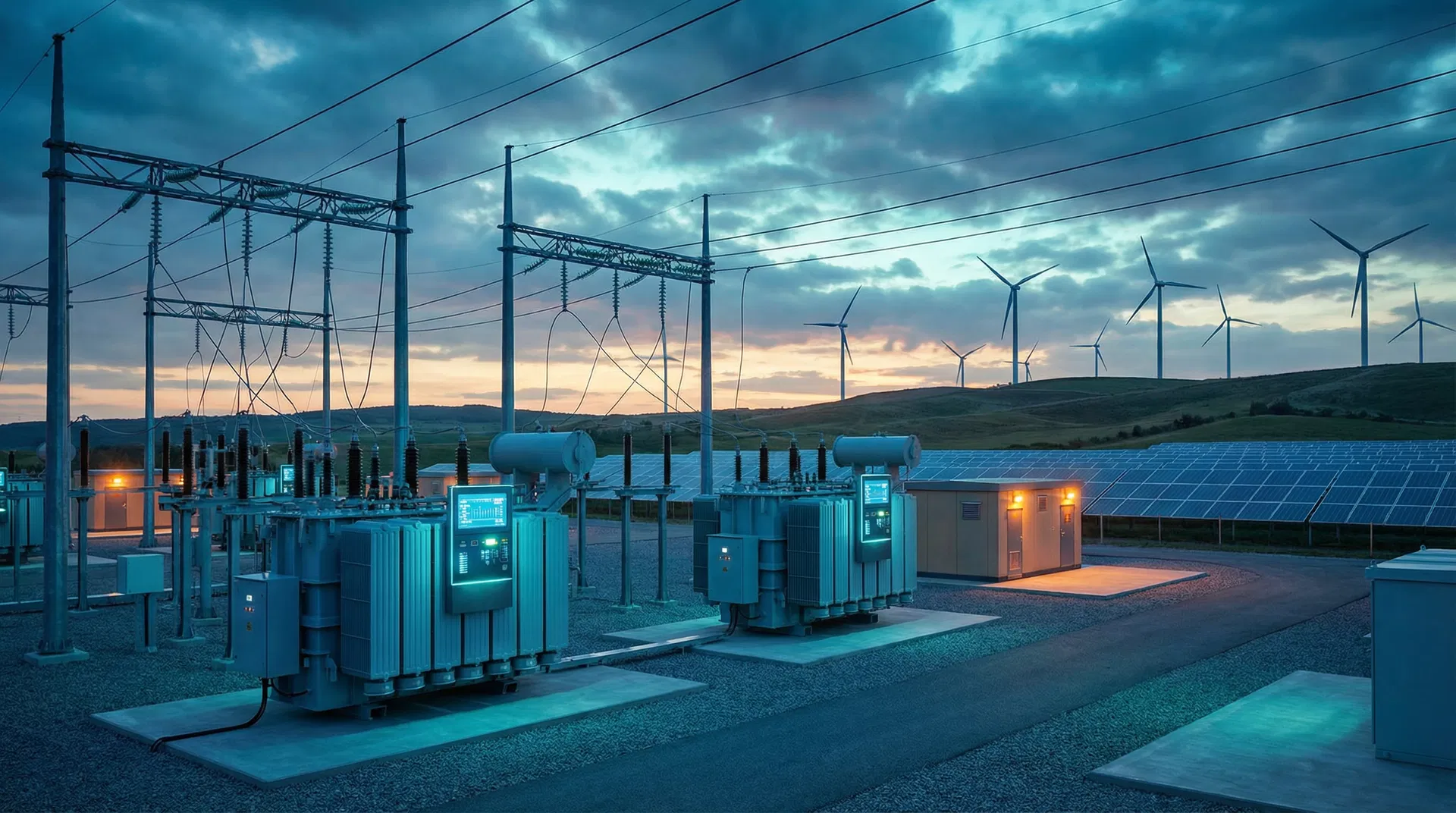
The global energy landscape is undergoing a profound transformation driven by the imperative for decarbonization and energy resilience. Central to this shift is the proliferation of Distributed Energy Resources (DER), which include localized generation and storage assets connected directly to the distribution network. Historically, power systems were designed for unidirectional power flow—from large central generators down to consumers. The massive influx of DER, particularly solar photovoltaic (PV) systems and Battery Energy Storage Systems (BESS), fundamentally challenges this paradigm.
This paradigm shift places significant stress on existing distribution infrastructure, most notably the distribution transformers. These transformers, the critical interface between the medium-voltage (MV) and low-voltage (LV) networks, were not engineered to handle the dynamic, often bidirectional power flow characteristic of modern grids.
Effective grid integration of DER requires comprehensive modernization, addressing technical hurdles related to voltage stability, power quality, and thermal management. This article delves into the specific challenges DER pose to transformer operation and outlines the enhanced requirements and smart grid solutions necessary to ensure a reliable and resilient electrical infrastructure.
Types of DER
Distributed Energy Resources encompass a diverse range of technologies characterized by their proximity to the load. Understanding the specific characteristics of each type is crucial for assessing their impact on the distribution transformer fleet.
| DER Type | Primary Impact on Grid | Typical Size Range |
|---|---|---|
| Rooftop Solar PV | Bidirectional power flow, voltage rise, intermittency | 1 kW to 5 MW |
| Battery Energy Storage Systems (BESS) | Flexible dispatch, voltage support, high ramp rates | 50 kW to 50 MW |
| Electric Vehicle (EV) Charging | High peak demand, harmonic injection (Level 3 DC fast charging) | 7 kW to 350 kW per charger |
| Combined Heat and Power (CHP) | Stable base load generation, potential islanding capability | 100 kW to 20 MW |
| Microgrids | Localized energy independence, complex control requirements | 1 MW to 100 MW |
Rooftop Solar PV
Solar PV is the most widespread form of distributed generation. Its intermittent nature and high penetration levels in residential and commercial areas are the primary drivers of bidirectional power flow. During periods of high solar irradiance and low local load, excess power is exported back into the grid, reversing the flow through the distribution transformer. This reverse flow is a major contributor to localized voltage rise.
Battery Energy Storage Systems (BESS)
BESS are increasingly deployed at the distribution level, offering essential flexibility. Unlike intermittent PV, BESS can be charged or discharged rapidly based on grid needs or market signals. They are vital for mitigating the variability of renewables and providing ancillary services like frequency and voltage regulation. However, their high ramp rates and the use of power electronic converters require careful management to prevent transient stability issues.
Electric Vehicle Charging
The rapid adoption of EVs introduces significant, concentrated loads. Level 2 (AC) and especially Level 3 (DC fast charging) stations can impose substantial peak demands on local transformers, often exceeding their nameplate capacity during peak charging hours. Furthermore, the power electronics used in DC fast chargers are sources of harmonic injection.
Combined Heat and Power (CHP)
CHP systems, typically utilizing natural gas turbines or reciprocating engines, provide both electrical power and useful thermal energy. They usually operate in parallel with the grid, providing stable, dispatchable power. Their impact is generally less variable than renewables, but they require robust synchronization and protection schemes for safe operation.
Microgrids
Microgrids are localized groups of interconnected loads and DER that can operate connected to the main grid or islanded. Transformers serving microgrids must handle sophisticated control strategies, frequent transitions between grid-connected and islanded modes, and potentially higher fault currents.
Technical Challenges
The integration of high-penetration DER introduces several critical technical challenges that impact the performance, lifespan, and reliability of distribution transformers.
Bidirectional Power Flow
The fundamental challenge posed by DER is the shift from unidirectional to bidirectional power flow.
Reverse Power Flow Issues
When DER output exceeds local consumption, power flows from the LV side back to the MV side of the transformer. Standard distribution transformers are typically designed and protected assuming power flows only one way. Reverse power flow can lead to:
- Protection Coordination Failure: Traditional overcurrent relays may misinterpret reverse flow as a fault, leading to nuisance tripping, or, conversely, fail to trip during a genuine fault if the fault current is masked by generation.
- Increased Losses: While overall system losses might decrease, localized transformer losses can increase if the transformer operates outside its optimal design point, particularly if the load profile is highly variable.
Voltage Rise Problems
The injection of reactive power (or active power in high-impedance feeders) from DER causes the voltage magnitude to increase along the feeder, moving away from the substation. If unmanaged, this can lead to voltages exceeding the permissible limits (e.g., ANSI C84.1 Range A limits, typically $\pm 5%$). This is particularly pronounced in weak rural feeders or circuits with high PV penetration.
Voltage Regulation
Maintaining voltage within acceptable limits becomes significantly more complex with variable distributed generation.
OLTC Requirements
Traditional substations rely on On-Load Tap Changers (OLTCs) on the primary transformer to regulate MV bus voltage. However, the influence of DER is often localized (downstream of the substation). The time constant of OLTCs (typically several seconds) is too slow to respond effectively to rapid fluctuations caused by cloud cover or BESS cycling. This necessitates faster, localized voltage control strategies.
Voltage Control Strategies
Utilities are moving toward integrated voltage control utilizing various assets:
- Line Drop Compensation (LDC): Needs modification to account for reverse power flow, potentially requiring dynamic LDC settings.
- Smart Inverters: Modern inverters compliant with standards like IEEE 1547-2018 are mandated to provide Volt-VAR and Volt-Watt functions, actively absorbing or injecting reactive power to stabilize local voltage.
Smart Inverter Functions
Smart inverters are the primary tool for localized voltage management. Key functions include:
- Volt-VAR Control: Adjusting reactive power output based on measured voltage to counteract voltage rise or sag.
- Volt-Watt Control: Reducing active power output when voltage exceeds a specified threshold, acting as a last-resort measure to prevent overvoltage.
Power Quality
The extensive use of power electronic converters (inverters) in DER introduces power quality concerns.
Harmonic Injection
Inverters convert DC power (from PV or batteries) to AC power. While modern inverters use sophisticated switching techniques (e.g., PWM) to minimize distortion, they still inject harmonics into the system. These non-sinusoidal currents increase the total harmonic distortion (THD) and can cause overheating in transformers due to eddy current losses (especially in the windings and core), leading to premature aging. The $K$-factor rating is often required for transformers serving high-harmonic loads like EV charging hubs.
Flicker
Rapid changes in DER output, such as those caused by fast-moving clouds over a large PV array or the sudden connection/disconnection of large BESS units, can cause rapid voltage fluctuations known as flicker. This is particularly noticeable to end-users and can violate power quality standards (e.g., IEC 61000 series).
Frequency Variations
While frequency control is primarily managed at the transmission level, large, concentrated DER can impact local frequency stability, especially in islanded microgrids or weak systems. Coordinated control is essential to maintain the nominal frequency (50 Hz or 60 Hz).
Thermal Management
Distribution transformers are thermally limited devices. DER significantly alters their loading profile.
Variable Loading Patterns
Traditional loading was predictable, peaking in the late afternoon/early evening. With high PV penetration, the transformer may experience peak loading during midday (due to generation) and then another peak in the evening (due to consumption), resulting in complex, high-cycle thermal stress. Furthermore, reverse loading can change the temperature gradient within the transformer, potentially leading to localized hotspots.
Peak Demand vs Generation
The worst-case thermal scenario often occurs when high generation (reverse flow) transitions rapidly to high consumption (forward flow), subjecting the transformer to extreme temperature swings. For example, a large EV charging depot combined with local PV generation creates a highly dynamic load profile.
Transformer Sizing Challenges
Utilities face a dilemma: should transformers be sized for the peak consumption load, the peak generation load, or a combination? Oversizing increases capital costs, while undersizing leads to reduced lifespan and potential failure. Accurate load forecasting and dynamic rating systems are necessary to optimize sizing.
Transformer Requirements for DER
Integrating DER requires transformers that possess enhanced capabilities beyond the traditional passive components.
Bidirectional Capability
Transformers must be designed to withstand sustained bidirectional power flow without excessive thermal stress or premature aging. This often means:
- Optimized Winding Design: Minimizing stray losses and eddy currents that increase under harmonic-rich or reverse-flow conditions.
- $K$-Factor Rating: Specifying transformers with a $K$-factor (e.g., $K=4$ or higher) to handle non-sinusoidal currents effectively, particularly for transformers serving EV charging infrastructure or large BESS.
Enhanced Monitoring
To manage dynamic DER environments, basic temperature gauges are insufficient. Advanced transformers require comprehensive monitoring systems:
- Winding and Oil Temperature Monitoring: Continuous monitoring with high-speed data acquisition.
- Partial Discharge (PD) Monitoring: Detecting insulation degradation early, crucial given the increased electrical stress from power electronics.
- Dissolved Gas Analysis (DGA): Online DGA systems provide early warnings of internal faults caused by thermal or electrical stress.
Dynamic Rating Systems
A Dynamic Thermal Rating (DTR) system allows the transformer to be operated above its nameplate rating for short periods, based on real-time factors like ambient temperature, solar exposure, and actual winding temperatures. This maximizes asset utilization and defers costly upgrades, especially in areas with temporary high DER output.
Tap Changer Specifications
While OLTCs are slow, the use of Voltage Regulators or Step-Voltage Regulators (SVRs) closer to the DER connection point is increasing. These devices, often integrated with smart grid controls, provide faster, localized voltage adjustments. For distribution transformers, the fixed tap settings must be carefully chosen to accommodate the expected voltage profile shift caused by generation.
Protection Schemes
Protection must be adapted for bidirectional flow. This involves:
- Directional Overcurrent Relays: Replacing non-directional relays to selectively trip only for faults in the intended direction, preventing nuisance tripping during reverse power export.
- Fault Current Contribution Analysis: Ensuring that the DER’s contribution to fault current (which can be limited by inverter capabilities) is properly modeled for relay settings.
Communication Interfaces
Modern transformers must be integrated into the utility's communication network.
- IEC 61850 Compliance: Utilizing standardized communication protocols for real-time data exchange (e.g., GOOSE messaging) with Advanced Distribution Management Systems (ADMS).
- DNP3/Modbus: Standard protocols for SCADA integration and remote control of monitoring devices.
Grid Codes and Standards
Standardization is essential for ensuring safe and reliable DER integration. Grid codes define the mandatory technical requirements for interconnection.
IEEE 1547 Requirements
IEEE Standard 1547 (Standard for Interconnection and Interoperability of Distributed Energy Resources with Associated Electric Power Systems) is the foundational standard in North America. The 2018 revision mandates advanced functionalities for DER, moving away from simple "connect and forget" principles:
- Ride-Through Capability: DER must remain connected during minor voltage and frequency disturbances (Low Voltage Ride Through - LVRT, High Voltage Ride Through - HVRT) to support grid stability.
- Voltage and Frequency Support: Mandating the use of smart inverter functions (Volt-VAR, Volt-Watt) to actively participate in voltage regulation.
- Interoperability: Requiring standardized communication interfaces for remote control and monitoring.
IEC 61850 Communication
The IEC 61850 suite provides a unified framework for communication in substations and distribution automation. Compliance ensures seamless integration of transformer monitoring data (temperature, tap position, health metrics) into the utility’s operational technology (OT) systems, enabling faster decision-making for DER management.
Regional Grid Codes
Specific regional codes (e.g., European Network Codes, NERC standards in North America) often impose stricter requirements on reactive power capability, power factor limits, and protection schemes based on the local grid topology and penetration levels.
Interconnection Requirements
Utilities impose rigorous technical studies (e.g., hosting capacity analysis, short-circuit analysis, transient stability studies) before permitting DER interconnection, ensuring the local transformer and feeder can safely handle the proposed generation or load.
Compliance Testing
All DER equipment, particularly inverters, must undergo certified compliance testing to verify that their control functions meet the mandated grid code requirements, minimizing the risk of adverse interactions with grid assets like transformers.
Smart Grid Solutions
The challenges posed by DER cannot be solved by hardware alone; they require intelligent, coordinated software systems.
Advanced Distribution Management Systems (ADMS)
ADMS platforms are the central nervous system of the modern grid. They integrate SCADA, Outage Management Systems (OMS), and Distribution Automation (DA) to provide real-time visibility and control. ADMS uses sophisticated algorithms to:
- State Estimation: Determine the real-time voltage and power flow across the entire distribution network, crucial for managing bidirectional flow.
- Optimization: Coordinate the actions of multiple DER, smart inverters, and traditional assets (like capacitor banks and voltage regulators) to maintain optimal voltage profiles.
Volt-VAR Optimization (VVO)
VVO is a key smart grid application designed to reduce system losses and improve voltage profiles. VVO algorithms dynamically adjust transformer tap positions, switch capacitor banks, and send control signals to smart inverters to manage reactive power flow. By maintaining voltages closer to the low end of the acceptable range, VVO reduces energy consumption and thermal stress on transformers.
Demand Response Integration
Demand Response (DR) programs incentivize consumers to reduce or shift their energy consumption during peak periods. Integrating DR with DER management helps flatten the net load curve seen by the distribution transformer, mitigating peak thermal loading and reducing the need for costly infrastructure upgrades.
Energy Storage Coordination
BESS are critical tools for DER integration. Coordinated control allows BESS to:
- Ramp Rate Control: Smooth the output variability of intermittent sources like PV, protecting transformers from rapid thermal cycling.
- Peak Shaving: Charge during low-load periods (or high generation) and discharge during peak consumption, significantly reducing the maximum instantaneous load on the transformer.
Forecasting and Scheduling
Accurate short-term forecasting of renewable generation (solar irradiance, wind speed) and load (EV charging patterns) allows the ADMS to proactively schedule transformer tap changes, BESS operations, and VVO actions, ensuring voltage stability before problems arise.
Case Studies
Real-world deployments illustrate the practical challenges and solutions in DER integration.
High PV Penetration Neighborhood
In regions like California or Germany, residential neighborhoods often reach PV penetration levels exceeding 100% of the minimum load. A common issue observed is daytime overvoltage, where voltages on the LV side of the distribution transformer exceed 1.05 per unit (p.u.).
- Solution: Deployment of smart inverters utilizing the Volt-VAR function (e.g., setting the inverter to absorb reactive power when voltage exceeds 1.03 p.u.). This localized reactive power absorption counteracts the voltage rise, allowing the utility to maintain stable voltage without immediate transformer replacement.
Microgrid Transformer Design
A military base implementing a resilient microgrid required a new substation transformer.
- Requirement: The transformer needed the ability to handle high harmonic content from large UPS systems and BESS, as well as the mechanical stresses associated with frequent synchronization and islanding operations.
- Design: The utility specified a transformer with a $K$-factor of 13, high-temperature insulation (Nomex), and enhanced mechanical bracing. It also included integrated digital sensors compliant with IEC 61850 for seamless communication with the microgrid controller.
EV Charging Hub Integration
The integration of a major DC fast-charging hub (e.g., 5 MW capacity) into an existing commercial feeder poses a severe thermal challenge.
- Challenge: The high, concentrated, non-coincident peak load from EV charging, combined with harmonic distortion, rapidly degrades the transformer insulation.
- Solution: Installation of a new transformer sized using a Dynamic Thermal Rating (DTR) system. The DTR system monitors ambient temperature and real-time load, allowing the utility to manage charging schedules dynamically, maximizing the transformer's useable capacity while ensuring its temperature limits are not violated, thus deferring a costly feeder upgrade.
Future Outlook
The evolution of DER integration points toward a highly decentralized and intelligent grid structure.
Virtual Power Plants (VPP)
VPPs aggregate the capacity of numerous small, geographically dispersed DER (including residential BESS and smart thermostats) into a single controllable entity. This allows the combined capacity to participate in wholesale markets and provide essential grid services, optimizing the loading and operation of upstream distribution transformers across a wide area.
Peer-to-Peer Energy Trading
Blockchain technology is enabling localized, secure energy transactions between prosumers. While primarily a commercial mechanism, this trading influences local power flow patterns, requiring transformers and local grid assets to handle highly dynamic, localized energy exchanges with minimal latency.
Blockchain Integration
Blockchain can provide a secure, decentralized ledger for metering and verifying DER generation and consumption, streamlining settlement processes and enabling faster, more granular control signals for grid assets.
AI-Based Grid Management
Artificial Intelligence and Machine Learning are being applied to analyze massive streams of data from smart meters and transformer sensors. AI can predict localized voltage instability, forecast solar ramp events, and optimize VVO settings in real-time, moving grid management from reactive control to proactive, predictive orchestration.
FAQ Section
Q: What is the primary risk of bidirectional power flow to a standard distribution transformer? A: The primary risk is thermal degradation. Standard transformers are not optimized for reverse flow, leading to increased stray losses, localized hotspots in the windings and core, and accelerated aging of the insulation due to high thermal cycling.
Q: How does the IEEE 1547 standard help mitigate voltage issues caused by DER? A: IEEE 1547-2018 mandates "smart inverter" functions, specifically Volt-VAR and Volt-Watt control. These functions allow inverters to actively adjust their reactive power output to counteract localized voltage rise or sag, providing the primary means of dynamic voltage regulation at the distribution level.
Q: What is a K-factor transformer and when is it required? A: A $K$-factor transformer is designed to handle the thermal effects of non-sinusoidal currents (harmonics). It is required when serving loads dominated by power electronics, such as large EV charging hubs, BESS, or data centers, where Total Harmonic Distortion (THD) is significant.
Q: What is the difference between OLTC and VVO in DER management? A: OLTC (On-Load Tap Changer) is a mechanical device on a substation transformer used for bulk voltage control, operating slowly (seconds). VVO (Volt-VAR Optimization) is a software-driven strategy that coordinates multiple assets (including smart inverters and capacitor banks) to achieve fine-grained, fast, and localized voltage and reactive power control across the entire feeder.
Conclusion
The integration of Distributed Energy Resources represents a fundamental shift in power system architecture, transforming passive distribution networks into active, dynamic grids. This transition places unprecedented operational and thermal stress on distribution transformers, challenging traditional design and operational practices. Addressing these challenges requires a holistic approach encompassing enhanced transformer specifications—including bidirectional capability, $K$-factor ratings, and advanced monitoring—coupled with sophisticated smart grid solutions like ADMS, VVO, and adherence to modern standards such as IEEE 1547. By embracing these technological and regulatory advancements, utilities can successfully harness the benefits of distributed generation while ensuring the continued reliability and resilience of the electrical power infrastructure.
Share this article
Related Articles
Eco-Friendly Transformers: Pioneering Sustainable Power Grids
The power industry is embracing sustainability, with eco-friendly transformer manufacturing at the forefront. This article delves into the critical role of sustainable materials, energy-efficient designs, and responsible production practices in shapi
Digital Transformation: Revolutionizing Power Distribution Networks
The power distribution landscape is undergoing a profound digital transformation, driven by smart grid technologies, IoT, and AI. This article delves into the trends, challenges, and opportunities shaping modern grids, highlighting Seatrust's role in
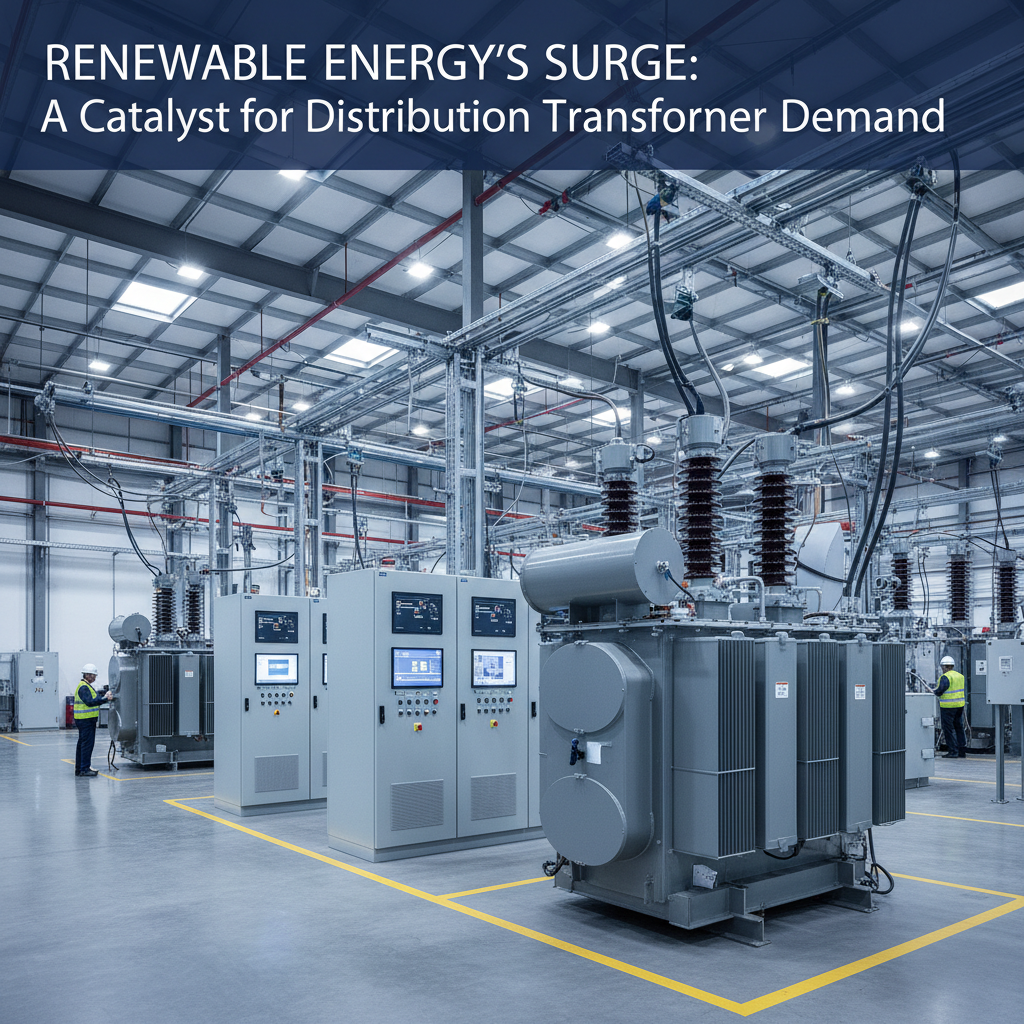
Renewable Energy's Surge: A Catalyst for Distribution Transformer Demand
The global energy landscape is undergoing a monumental shift towards renewables, creating an unprecedented surge in demand for critical grid infrastructure, particularly distribution transformers. This article delves into the intricate relationship b