
Digital Transformation: Revolutionizing Power Distribution Networks
The power distribution landscape is undergoing a profound digital transformation, driven by smart grid technologies, IoT, and AI. This article delves into the trends, challenges, and opportunities, highlighting how these advancements are creating mor
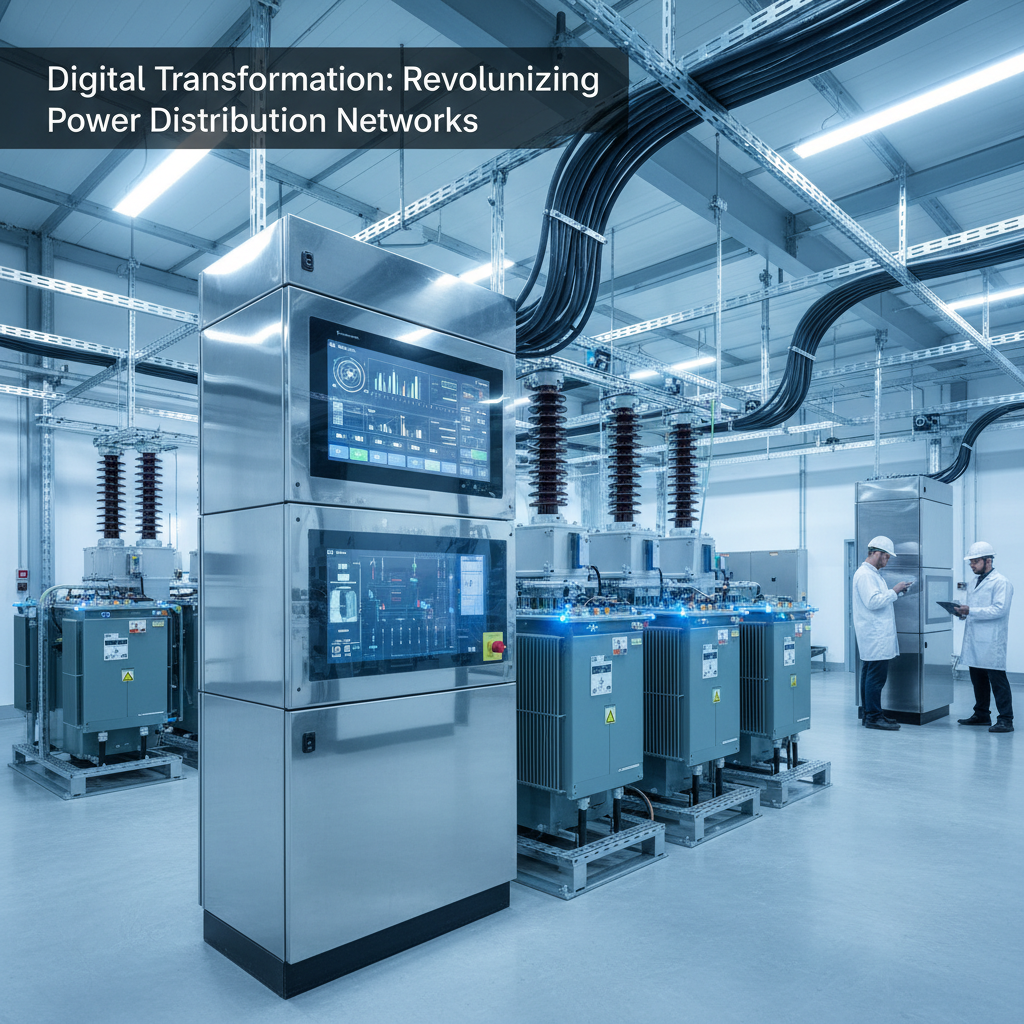
Digital Transformation: Revolutionizing Power Distribution Networks
The global energy landscape is in the midst of an unprecedented transformation. Driven by the urgent need for decarbonization, the proliferation of renewable energy sources, and the increasing demand for reliable power, traditional power distribution networks are evolving at an astonishing pace. At the heart of this evolution lies digital transformation – a paradigm shift that integrates advanced technologies to create smarter, more resilient, and highly efficient electrical grids. For utilities, industries, and consumers alike, understanding and embracing this digital revolution is no longer optional; it is imperative for future energy security and sustainability.
Since 1993, Seatrust has been at the forefront of manufacturing robust and reliable power transformers, including pad-mounted, pole-mounted, and dry-type units, essential components in these evolving networks. Our UL/CSA certified and ISO 9001:2015 compliant products, delivered to over 40 countries, underscore our commitment to quality and innovation, providing the foundational hardware upon which these digital advancements are built.
The Dawn of the Smart Grid: Pillars of Digital Transformation
The concept of a "smart grid" has moved from theoretical discussions to practical implementation, representing the core of digital transformation in power distribution. A smart grid leverages advanced communication, sensing, and control technologies to enhance the efficiency, reliability, and security of the electricity supply. This involves a multifaceted approach, integrating various digital components:
1. Advanced Metering Infrastructure (AMI) and IoT Integration
AMI, often referred to as smart meters, forms the bedrock of data collection in a digitalized grid. Unlike traditional meters, AMI systems provide real-time, two-way communication between utilities and consumers, enabling granular data collection on energy consumption. This data is invaluable for:
- Demand Response Programs: Utilities can incentivize consumers to reduce energy consumption during peak hours, balancing load and preventing blackouts. For instance, a utility might offer reduced rates for shifting appliance usage to off-peak times.
- Outage Management: Faster detection and localization of outages, significantly reducing restoration times. Smart meters can report outages automatically, pinpointing the exact location.
- Billing Accuracy and Efficiency: Eliminating manual meter readings and providing consumers with detailed usage insights, fostering better energy management.
Beyond smart meters, the Internet of Things (IoT) is expanding to encompass a vast array of grid assets. Sensors embedded in transformers, circuit breakers, power lines, and even distributed energy resources (DERs) like solar panels and EV charging stations, constantly monitor operational parameters such as temperature, voltage, current, and vibration. This influx of data, transmitted via secure communication networks (e.g., cellular, fiber optics, radio frequency), creates an unprecedented level of visibility into the grid's health and performance. For example, a transformer equipped with IoT sensors can proactively alert operators to overheating or unusual electrical signatures, preventing catastrophic failures and extending asset lifespan.
2. Data Analytics, Artificial Intelligence (AI), and Machine Learning (ML)
The sheer volume of data generated by AMI and IoT devices would be overwhelming without sophisticated analytical tools. This is where AI and ML come into play, transforming raw data into actionable intelligence:
- Predictive Maintenance: AI algorithms analyze historical and real-time data from grid components, including transformers, to predict potential failures before they occur. This allows utilities to schedule maintenance proactively, minimizing downtime and costly emergency repairs. For a distribution transformer, this could mean identifying subtle changes in oil quality or winding temperature that indicate impending issues, leading to scheduled maintenance rather than an unexpected outage.
- Load Forecasting and Optimization: ML models can accurately predict future energy demand based on historical patterns, weather forecasts, economic indicators, and even social events. This enables utilities to optimize generation and distribution, reducing waste and improving grid stability. For instance, predicting a heatwave allows for pre-emptive adjustments to transformer tap settings to manage increased load.
- Fault Detection and Self-Healing Grids: AI-powered systems can rapidly identify the location and nature of faults on the network. In conjunction with automated switches, these systems can isolate the faulty section and reroute power around it, restoring service to unaffected areas almost instantaneously. This concept of a "self-healing grid" significantly enhances reliability and reduces the duration of outages.
- Integration of Distributed Energy Resources (DERs): With the rise of rooftop solar, battery storage, and electric vehicles, managing bidirectional power flow and voltage stability becomes complex. AI algorithms can optimize the integration and dispatch of DERs, ensuring grid stability and maximizing the utilization of renewable energy. This is particularly relevant for Seatrust's pad-mounted transformers, which are frequently deployed in renewable energy installations and microgrids.
3. Advanced Grid Control and Automation
Digital transformation empowers utilities with unprecedented control over their networks, moving from manual operations to highly automated systems:
- Supervisory Control and Data Acquisition (SCADA) Systems: Modern SCADA systems are the central nervous system of the grid, providing real-time monitoring and control of substations, feeders, and other critical assets. They integrate data from various sources and allow operators to issue commands remotely.
- Geographic Information Systems (GIS): GIS provides a visual, spatial representation of the entire distribution network, integrating asset data, customer information, and operational status. This enhances situational awareness, aids in planning, and improves emergency response.
- Automated Distribution Management Systems (ADMS): ADMS combines SCADA, GIS, outage management systems (OMS), and other applications into a unified platform. It provides advanced functionalities like fault location, isolation, and service restoration (FLISR), volt/VAR optimization (VVO), and real-time network analysis. These systems enable utilities to automatically react to grid disturbances and optimize performance without human intervention.
Challenges and Opportunities in Digitalization
While the benefits are clear, the path to a fully digitalized power distribution network is not without its hurdles.
Key Challenges:
- Cybersecurity Risks: A highly interconnected and data-driven grid presents a larger attack surface for cyber threats. Protecting critical infrastructure from sophisticated cyberattacks is paramount and requires continuous investment in robust security protocols and technologies.
- Interoperability and Standardization: Integrating diverse hardware and software from multiple vendors can be complex. Lack of universal standards for communication protocols and data formats can hinder seamless integration and data exchange.
- Data Management and Storage: The sheer volume of data generated by a smart grid requires significant infrastructure for storage, processing, and analysis. Ensuring data quality, integrity, and accessibility is crucial.
- Capital Investment: The upfront cost of deploying smart grid technologies, including AMI, sensors, communication networks, and advanced software, can be substantial. Utilities need to justify these investments with clear return-on-investment (ROI) models.
- Workforce Development: A digitalized grid requires a workforce with new skills in data science, cybersecurity, automation, and IT/OT convergence. Training and upskilling existing personnel, alongside attracting new talent, is essential.
Significant Opportunities:
- Enhanced Reliability and Resilience: Digital tools enable faster fault detection, isolation, and restoration, leading to fewer and shorter outages. Predictive maintenance reduces equipment failures, and self-healing capabilities enhance grid resilience against extreme weather events and other disturbances.
- Increased Efficiency and Reduced Losses: Volt/VAR optimization, enabled by smart grid technologies, minimizes energy losses during transmission and distribution. Better load management reduces peak demand, potentially delaying the need for costly infrastructure upgrades. The U.S. Department of Energy estimates that smart grid technologies could reduce electricity losses by 10-20%.
- Integration of Renewable Energy: Digitalization is key to effectively integrating intermittent renewable energy sources like solar and wind into the grid. It allows for better forecasting, dispatch, and balancing, accelerating the transition to a cleaner energy future.
- Customer Engagement and Empowerment: Real-time energy consumption data and demand response programs empower consumers to make informed choices about their energy usage, leading to savings and greater satisfaction.
- New Business Models: The digital grid opens doors for new services and business models, such as energy as a service, peer-to-peer energy trading, and microgrid development.
Seatrust's Role in the Digital Evolution of Power Networks
As a leading manufacturer of high-quality power transformers, Seatrust plays a critical, foundational role in enabling digital transformation within power distribution networks. Our products are the robust, reliable backbone that supports the intelligent overlay of smart grid technologies.
- Foundation for Smart Grids: Our pad-mounted, pole-mounted, and dry-type transformers are essential components in substations and distribution points. For a smart grid to function, the underlying electrical infrastructure must be dependable. Seatrust's UL/CSA certified transformers ensure this reliability, providing stable voltage transformation critical for sensitive digital equipment.
- Integration with IoT and Sensors: Modern Seatrust transformers are designed to be compatible with and can be equipped with various IoT sensors. These sensors monitor key operational parameters such as winding temperature, oil temperature, pressure, and partial discharge. This data, fed into AI/ML platforms, enables predictive maintenance, extends asset life, and prevents catastrophic failures, aligning perfectly with smart grid objectives.
- Supporting Renewable Energy Integration: With the increasing deployment of solar farms, wind power, and battery storage, our distribution transformers are vital for stepping up or stepping down voltage to connect these DERs to the main grid. Our expertise in manufacturing transformers for renewable energy applications directly supports the digital grid's ability to manage diverse energy sources.
- Enabling Microgrids and Resiliency: Seatrust transformers are deployed in microgrid applications, which are inherently digitally controlled and designed for enhanced local resilience. Our robust units ensure stable power delivery within these advanced, self-sufficient energy systems.
- Quality and Compliance for Digital Reliability: Our ISO 9001:2015 certification and adherence to international standards mean that our transformers provide a consistent, high-quality performance baseline. This reliability is crucial for the continuous operation of the digital infrastructure that monitors and controls the grid. Any instability at the transformer level could compromise the integrity of the digital data stream and control signals.
By providing the highest quality and most reliable transformer solutions, Seatrust ensures that the physical infrastructure is ready to embrace and leverage the full potential of digital transformation, contributing to a more efficient, resilient, and sustainable power future.
The Future: Hyper-Connected and Autonomous Grids
The digital transformation of power distribution networks is an ongoing journey, with future developments promising even more sophisticated and autonomous grids.
- Edge Computing and Decentralization: Processing data closer to the source (at the grid edge) will reduce latency and improve real-time decision-making, especially critical for managing distributed energy resources and microgrids. This will lead to more localized intelligence and control.
- Blockchain for Grid Transactions: Blockchain technology could revolutionize energy trading, enabling secure, transparent, and immutable transactions for peer-to-peer energy sharing, carbon credit trading, and grid services.
- Digital Twins: Creating virtual replicas of physical grid assets and the entire network will allow utilities to simulate various scenarios, test new technologies, and optimize operations in a risk-free environment before deploying them in the real world. This will significantly enhance planning and predictive capabilities.
- Enhanced Cybersecurity Measures: As grids become more digital, cybersecurity will evolve with advanced AI-driven threat detection, quantum-resistant cryptography, and more resilient, self-healing network architectures.
- Greater Human-Machine Collaboration: While automation will increase, human operators will transition to roles focused on strategic oversight, complex problem-solving, and managing the AI systems, fostering a new era of human-machine collaboration.
The digital transformation of power distribution networks is not merely an upgrade; it is a fundamental re-imagining of how electricity is generated, delivered, and consumed. It promises a future where energy is cleaner, more reliable, and accessible to all. Seatrust remains committed to supporting this evolution by providing the essential, high-performance transformer technology that underpins these intelligent, interconnected grids, ensuring a robust foundation for the power networks of tomorrow.
Share this article
Related Articles
Eco-Friendly Transformers: Pioneering Sustainable Power Grids
The power industry is embracing sustainability, with eco-friendly transformer manufacturing at the forefront. This article delves into the critical role of sustainable materials, energy-efficient designs, and responsible production practices in shapi
Digital Transformation: Revolutionizing Power Distribution Networks
The power distribution landscape is undergoing a profound digital transformation, driven by smart grid technologies, IoT, and AI. This article delves into the trends, challenges, and opportunities shaping modern grids, highlighting Seatrust's role in
Renewable Energy's Surge: A Catalyst for Distribution Transformer Demand
The global energy landscape is undergoing a monumental shift towards renewables, creating an unprecedented surge in demand for critical grid infrastructure, particularly distribution transformers. This article delves into the intricate relationship b