Transformer Technical Guide
NEMA Ratings for Transformer Enclosures
Match the enclosure requirement to site exposure, cooling and the offered assembly.
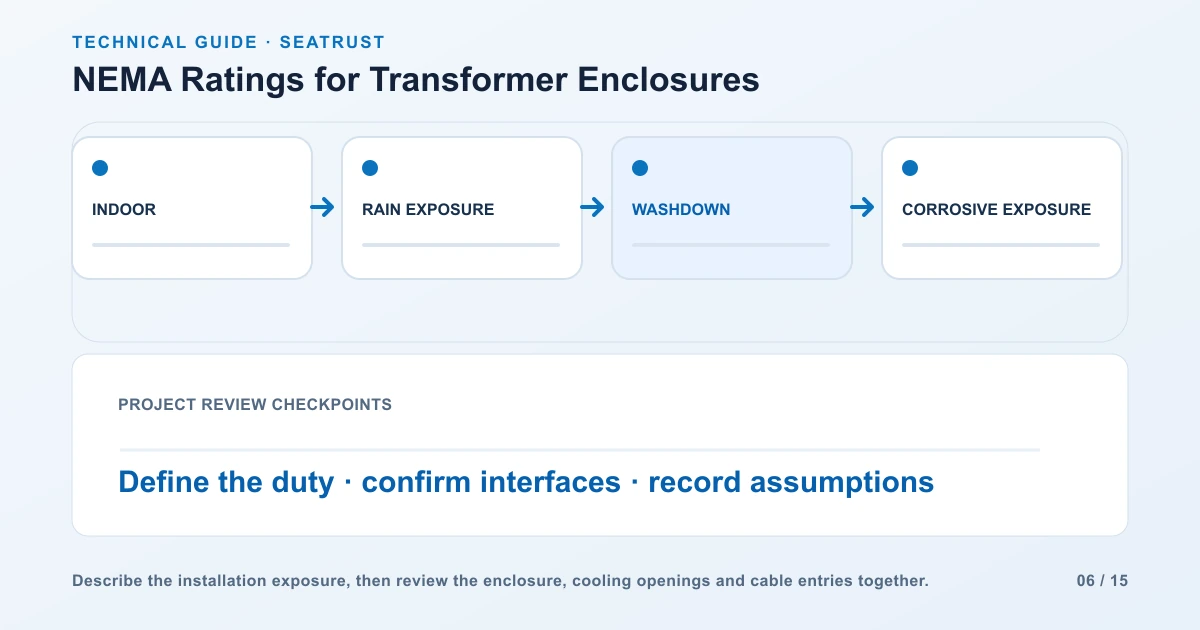
NEMA enclosure types describe environmental protection for electrical equipment. Begin with the installation conditions: indoor or outdoor location, dust, precipitation, washdown and corrosive exposure. Then review the specified enclosure as part of the complete transformer arrangement, including cooling, cable entries and access.
Define the installation exposure
Write down what can reach the equipment at its actual position. A roof may reduce direct rain but leave windblown dust or cleaning spray. An indoor production area may contain airborne fibers, dripping liquid or corrosive chemicals. Record each exposure separately, along with ambient temperature and ventilation. Use that description to ask the equipment supplier for an appropriate enclosure and the documentation supporting the proposed construction.
| Project condition | Question to resolve | Enquiry attachment |
|---|---|---|
| Outdoor rain | How is weather exposure addressed? | Site photos and exposure description |
| Washdown area | What water direction and cleaning conditions apply? | Cleaning procedure and enclosure requirement |
| Corrosive atmosphere | Which chemicals or salt exposure are present? | Environmental specification and material requirement |
| Dust and restricted ventilation | How are cooling and ingress protection coordinated? | Heat-loss data and ventilation design |
Specify the required NEMA type and the applicable project specification. Keep the manufacturer's enclosure declaration with the offered configuration, including its cooling and cable-entry arrangement.
Compare the environmental duties
The table compares commonly discussed enclosure types for ordinary locations. Type 1 addresses basic indoor contact and falling dirt. Type 3R adds outdoor weather conditions. Types 4 and 4X cover more demanding water and dust exposure, with 4X adding corrosion resistance. Type 12 addresses specific indoor dust and liquid conditions. Select by the required exposures and complete equipment design, then confirm the applicable specification in the project documents.
| Type | Location | Environmental duty summary | Project check |
|---|---|---|---|
| 1 | Indoor | Incidental contact and falling dirt | Confirm a dry indoor installation. |
| 3R | Indoor or outdoor | Falling dirt, rain, sleet and snow; external ice formation | Identify windblown dust and cleaning exposure separately. |
| 4 | Indoor or outdoor | Windblown dust, splashing and hose-directed water, plus weather exposure | Match the proposed cleaning method and installed fittings. |
| 4X | Indoor or outdoor | Type 4 environmental duties with corrosion resistance | State the actual corrosive agents and review material compatibility. |
| 12 | Indoor | Circulating dust, lint, falling dirt and specified dripping or light-splashing conditions | Review dust, liquids, cooling and cable entries. |
Coordinate enclosure protection with transformer cooling
A transformer releases heat during operation. Ask the manufacturer to show how the proposed enclosure supports the required thermal performance at the stated load and ambient conditions. Review vents, filters, fans and any maintenance access together with the protection requirement. Adding a cover, blocking an opening or replacing a ventilation component changes the physical arrangement; obtain the manufacturer's approval before changing the supplied design.
Review cable entries and installed accessories
Mark the incoming and outgoing cable locations on the enclosure drawing. Include cable sizes, entry direction, glands or hubs, unused openings, drains and any mounted accessories. Ask which fittings are included and how the completed assembly maintains the specified protection. Keep the entry detail and enclosure drawing under the same revision so a later cable-route change receives an enclosure review as well.
Work through an indoor workshop example
Example project: an indoor workshop has circulating noncombustible dust, occasional water drips above the proposed location and a dry-type transformer in the equipment schedule. The first enquiry identifies those conditions and asks for an enclosure assessment, using Type 12 as a discussion point. It also supplies the transformer duty, room temperature, heat-removal plan and cable-entry drawing. If the area is later cleaned with a hose, revise the exposure description and obtain a new selection review before approving the enclosure.
Prepare the enclosure enquiry and supporting documents
The quotation should identify the enclosure type, materials and finish, complete equipment model, installed accessories and referenced specification. Request the relevant declaration or third-party certification documentation required by the project. Where a listing is specified, check its scope against the quoted configuration. For a hazardous location, provide the area's classification to the responsible designer and request equipment assessed for that duty.
Attach the exposure schedule and the latest layout to the transformer enquiry. State whether the project team or supplier selects the enclosure construction, who provides cable-entry fittings and who approves field changes. Keep required capacity, winding voltages, frequency, cooling and site conditions together so the enclosure review uses the same operating assumptions as the transformer selection.
| Item | Information to provide | Requested response |
|---|---|---|
| Exposure | Location, dust, rain, cleaning and chemicals | Proposed type and material selection |
| Thermal duty | Load, ambient temperature and room ventilation | Cooling arrangement and operating conditions |
| Cable entries | Sizes, directions, openings and entry drawing | Included fittings and installation detail |
| Access | Door swing, service position and maintenance route | Approved enclosure layout |
| Documentation | Project specification and required certification | Documents covering the quoted assembly |
| Changes | Any later opening, accessory or cleaning-method change | Revised review and approved drawings |
FAQ
What is the practical difference between NEMA 3R and 4?
Type 3R addresses specified weather exposure. Type 4 includes protection against windblown dust, splashing and hose-directed water. Describe the site's actual exposures before selecting the equipment.
What does the X in 4X add?
It adds corrosion resistance to the Type 4 environmental duties. Identify the chemicals or corrosive atmosphere so the proposed materials can be assessed for that installation.
Is NEMA 12 an outdoor selection?
Type 12 is intended for indoor use. Supply the outdoor weather and other exposure conditions when requesting an outdoor enclosure.
Which parts should the enclosure review cover?
Review the complete arrangement, including doors, seals, vents, cable-entry fittings and mounted accessories, against the quoted type and required operating conditions.
Specify the enclosure for your transformer project
Send the installation environment, required transformer ratings and cable-entry drawing for a configuration review.